ANCHORS AWEIGH
Whatever the type of boat you own, your anchor is one of the most important pieces of safety gear to have. Your cell phone or VHF radio will not stop your boat from drifting towards shore with a dead engine. Ask any cruiser, and they will tell you just how much they are able to sleep soundly, knowing that their boat is held securely against wind, current and waves.
Which anchor should you choose? The answer can often be “more than one type” depending upon your bow roller, anchor locker or other storage space you have on board. This is because the type of bottom, whether it be mud, sand, coral, or rock as well as the size and windage of your boat will have a bearing on which anchor is your best choice. Since many boats are used in a variety of conditions, having a couple types of anchors on board makes good sense.
The selection can be divided into many types of anchors, but for simplicity and typical US conditions, we will stick with four: plough, fluke, claw, and Sarca. Depending on the type of boat you have and the makeup of the bottom where you expect to deploy your anchor, one or more of these types of anchors should be good for you.
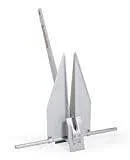
The Fluke or Danforth anchor is lightweight and made usually of strong steel. It has high holding power in sandy conditions.
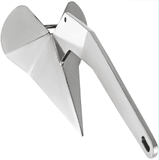
The Plough, CQR or Delta anchor has good holding power in multiple types of condition and more forgiving than some other types of anchors when the wind changes direction. It resets more easily because of shape and swivel ability.
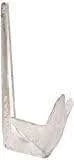
The Claw or Bruce anchor sets easily and is useful in the above conditions plus rock. A bit more difficult to set, it is a good idea to go a size over what is recommended for your vessel.
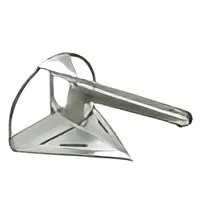
The Sarca anchor is a dual-purpose, sand and reef anchor, which has extremely good holding power in those conditions.
The anchor manufacturers all publish charts for you to appropriately size your anchor. Do not go conservative with size, always go up if possible. Having a properly sized anchor ready could make the difference in an emergency between drifting onto a beach, rocky shore or staying free from danger.
When selecting an anchor, you should think of it as part of a complete ground tackle system. Apart from the anchor itself, ground tackle systems include the rode, which can be all rope, all chain, or a combination of rope and chain. The system also will include a means to store your anchor, which might be a bow roller or at its simplest, an anchor bag that holds your anchor and rode.
Fun facts: ‘Anchors Aweigh’ is an old expression meaning the ship's hoisted anchor has just cleared the sea's bottom and, by implication, the voyage is underway.
