Keep Your Bonding System Healthy
Understanding and Maintaining Bonding Wires
Believe it or not, the bonding wires in your bilge, which connect all of the metal components in your vessel, require regular maintenance. It is advisable to occasionally inspect these wires and give them a quick brush with a stainless steel or bronze brush (a toothbrush-sized brush works well), checking for any signs of corrosion or patina buildup. Performing these simple checks helps extend the life of your bonding system.
Purpose of Bonding Wires and Anodes
Simply put, these wires are connected to the anodes (zincs) located on the exterior of your vessel. These anodes serve as sacrificial metals specifically designed to corrode so that the critical metals on your vessel—such as skin fittings, thru-hull valves, struts, rudders, and any other metals exposed to the saltwater environment—can continue to function effectively and last longer.
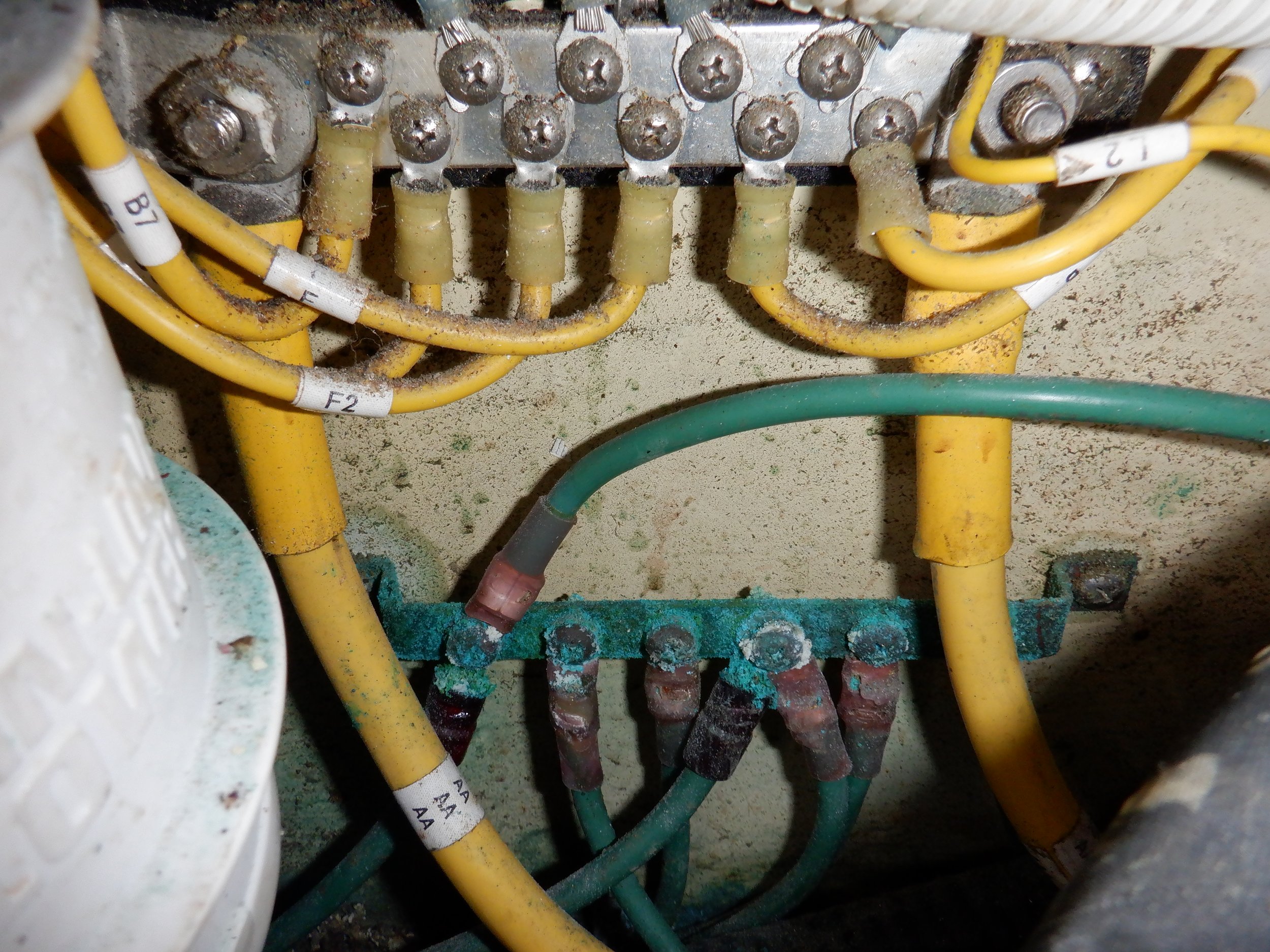
Connection Standards and Best Practices (see photo below)
Connections on the bottom bonding buss are corroded and no longer offer protection through continuity of connection. Connections should look like wire connections on the top grounding buss.
Recommended Yacht Standards for Bonding Wire Maintenance
If you need to replace or repair bonding wires or their connections, adhere to the following yacht standards:
Bonding wires (conductors) should be oil-resistant, insulated, tinned, stranded copper wire, or uninsulated copper strip. Do not use copper braid or copper tubing for this purpose.
The exception to this is bonding wires (conductors) used in submerged applications, such as for outboard motors or outdrives, which should be made from manufacturer-approved corrosion-resistant materials like stainless steel cable.
When using wire, it should be at least #8 AWG.
Avoid using self-tapping fasteners for connections.
All connections must be kept clean and free from corrosion.
Bonding wire is identified by its green color and/or a green wire with a yellow stripe.